

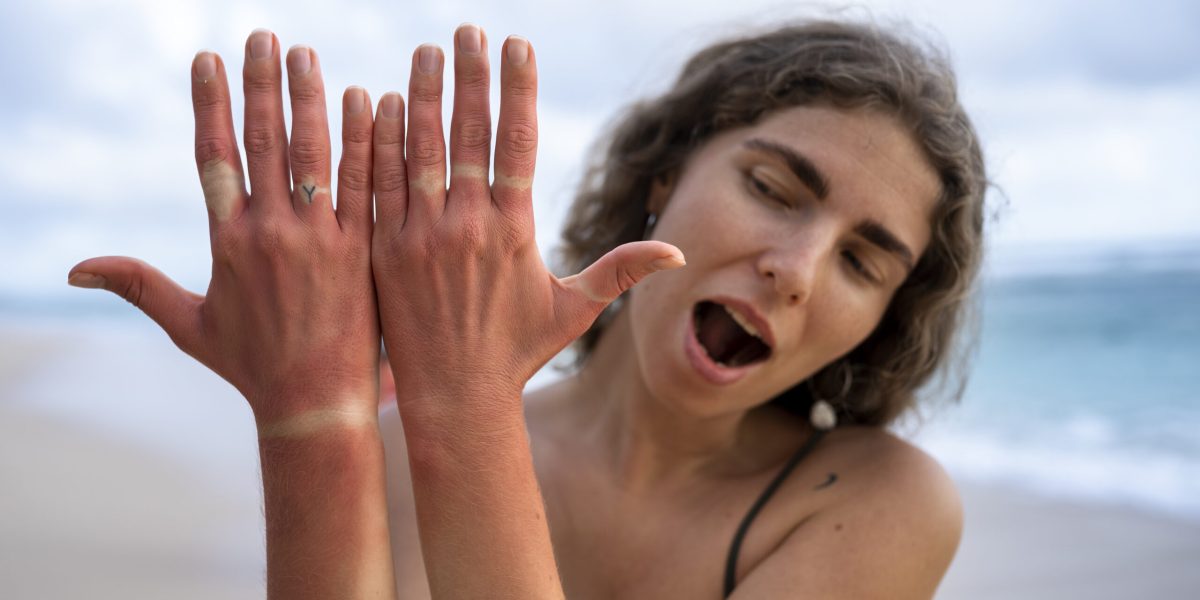
SIGNS OF SUNBURN VS. SUN POISONING
The sun emits ultraviolet (UV) rays that can damage skin and tissue, resulting in sunburn or sun poisoning. Below are the symptoms of both.
Sunburn
- Skin appears darker or red (depending on skin tone)
- Skin swelling
- Skin is tender to the touch
- Skin is sensitive to cold or hot
- Skin blisters or peels (in severe cases)
Sun Poisoning
- Sunburn symptoms
- Fatigue or sleepiness
- Nausea and/or vomiting
- Fever
- Vertigo or dizziness
WHO IS AT RISK FOR SUNBURN OR SUN POISONING?

People with lighter skin tones are at a greater risk of sunburn and sun poisoning. However, people with darker skin tones are not immune to skin damage and complications of prolonged sun exposure and should take precautions to avoid sunburn and sun poisoning.
Additional risk factors for sun poisoning include:
- Fair skin or red, blond, or light brown hair
- Drinking alcohol, since it tends to dehydrate the body
- High altitudes or locations where the ozone layer is depleted, which allows more UV rays to penetrate the skin
- Prior history of skin cancer treatment or a family member who has been diagnosed with skin cancer
- Spending most of the day outdoors without proper skin protection
Having awareness of risk factors can help prevent both sunburn and sun poisoning.
Medications and Supplements May Increase Your Risk
Certain medications and herbal supplements can make your skin more prone to sunburn. Examples include:
- Acne treatments, such as retinoids
- Antibiotics such as doxycycline or tetracycline
- Fluoroquinolones
- Herbs and supplements such as St. John’s wort and niacin
- Nonsteroidal anti-inflammatory drugs (NSAIDs) like ibuprofen
- Sulfonamides
- Thiazide diuretics
HOW TO PREVENT SUNBURN AND SUN POISONING?
There are ways to prevent sunburn and sun poisoning:
- Wear sunscreen rated with a sun protection factor (SPF) of 15 or higher and apply liberally, including your nose, ears, neck, feet, hands, and lips.
- Reapply sunscreen at least every 2 hours or more often with excessive sweating or after swimming.
- Wear clothing with SPF protection.
- Protect your eyes by using a wide-brimmed hat or sunglasses with UV protection.
Additional prevention for sun poisoning includes:
- Consider limiting exercise or other intense physical activity when the sun is at its peak
- Drink extra water
- Seek shade or a cool place out of the sun
- Wear loose-fitting clothing
HOW TO TREAT A SUNBURN OR SUN POISONING?
Sunburn generally can be treated with some first aid:
- Apply cool cloths to the sunburned areas
- Avoid further sun exposure until the skin heals
- Drink plenty of water to avoid dehydration
- Use Tylenol (acetaminophen) or Advil (ibuprofen) to help decrease pain and inflammation
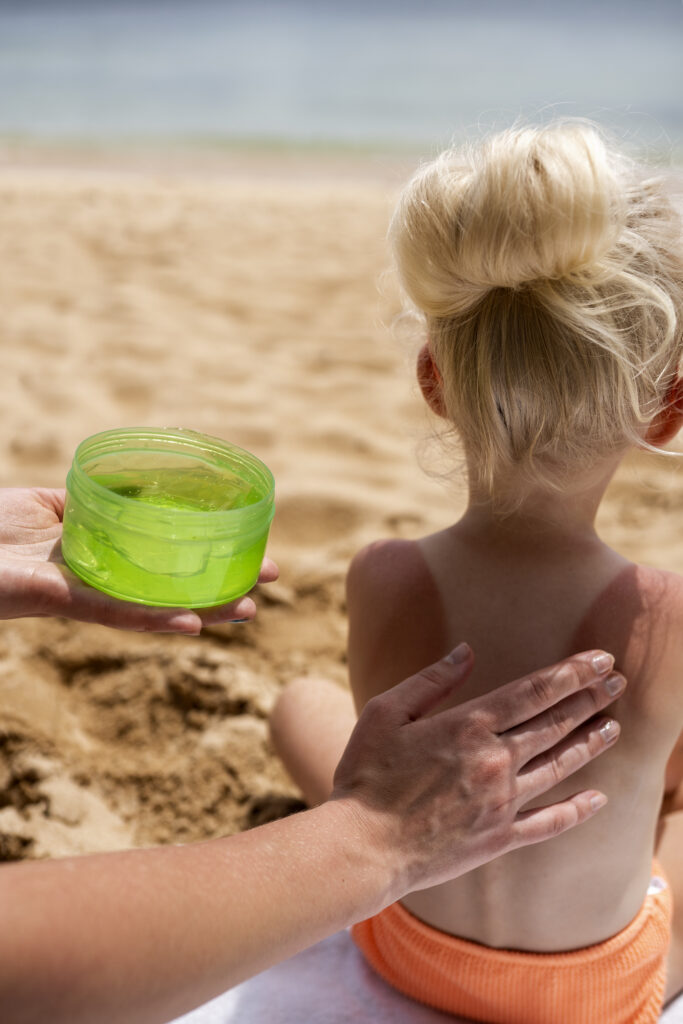
- Use a moisturizer on the skin, such as aloe or 1% hydrocortisone cream
- If the skin blisters, avoid opening the blisters and cover the skin lightly with gauze to prevent infection.
For sun poisoning, consider additional treatment options:
- Drink plenty of liquids slowly to prevent vomiting
- Keep the skin away from direct and indirect sunlight
- If a fever develops, consider taking a cool bath.
- If symptoms worsen, consider placing cool packs in the armpits, neck, groin, wrists, and ankles to cool down.
Knowing some basic treatments for sunburns and sun poisoning can help prevent worsening symptoms, but when in doubt, seek emergency medical care.
WHEN TO GET HELP?
Sunburn and sun poisoning can usually be treated with first aid, but if any of the following symptoms develop, seek urgent medical attention:
- A fever higher than 101.0 degrees Farenheight
- Dehydration from inability to drink enough fluids due to nausea and/or vomiting
- Pain that is unrelieved with Tylenol or Advil
- Severe sunburns that cover more than 15% of the skin
- The skin is pale
- The heartbeat is very fast
- The person is confused or loses consciousness
Key Takeaways
- Sunburns cause skin symptoms and lead to damage.
- Sun poisoning includes a sunburn and symptoms like fatigue, nausea, and dizziness.
- Wearing sunscreen, drinking plenty of fluids, and avoiding peak sun times can help prevent sunburn and sun poisoning.
Sources and references:
- The National Institute for Occupational Safety and Health. Sunburn.
- Burn and Reconstructive Centers of America. How to identify and treat sunburns and sun poisoning in kids.
- Skin Cancer Foundation. Sunburn.
- First Aid Training Co-Operative. 4 Steps to treat sunburn.
- Environmental Protection Agency. Ultraviolet radiation and sun exposure.
- National Library of Medicine. Sunburn.
- National Institute for Occupational Safety and Health. Sun exposure at work.
- American College of Emergency Physicians. Tips from emergency physicians to avoid a heat emergency.
P.Assid.et.al.Sunburn vs. Sun Poisoning: How to Identify the Warning Signs and Protect Your Skin.2025. https://www.verywellhealth.com

